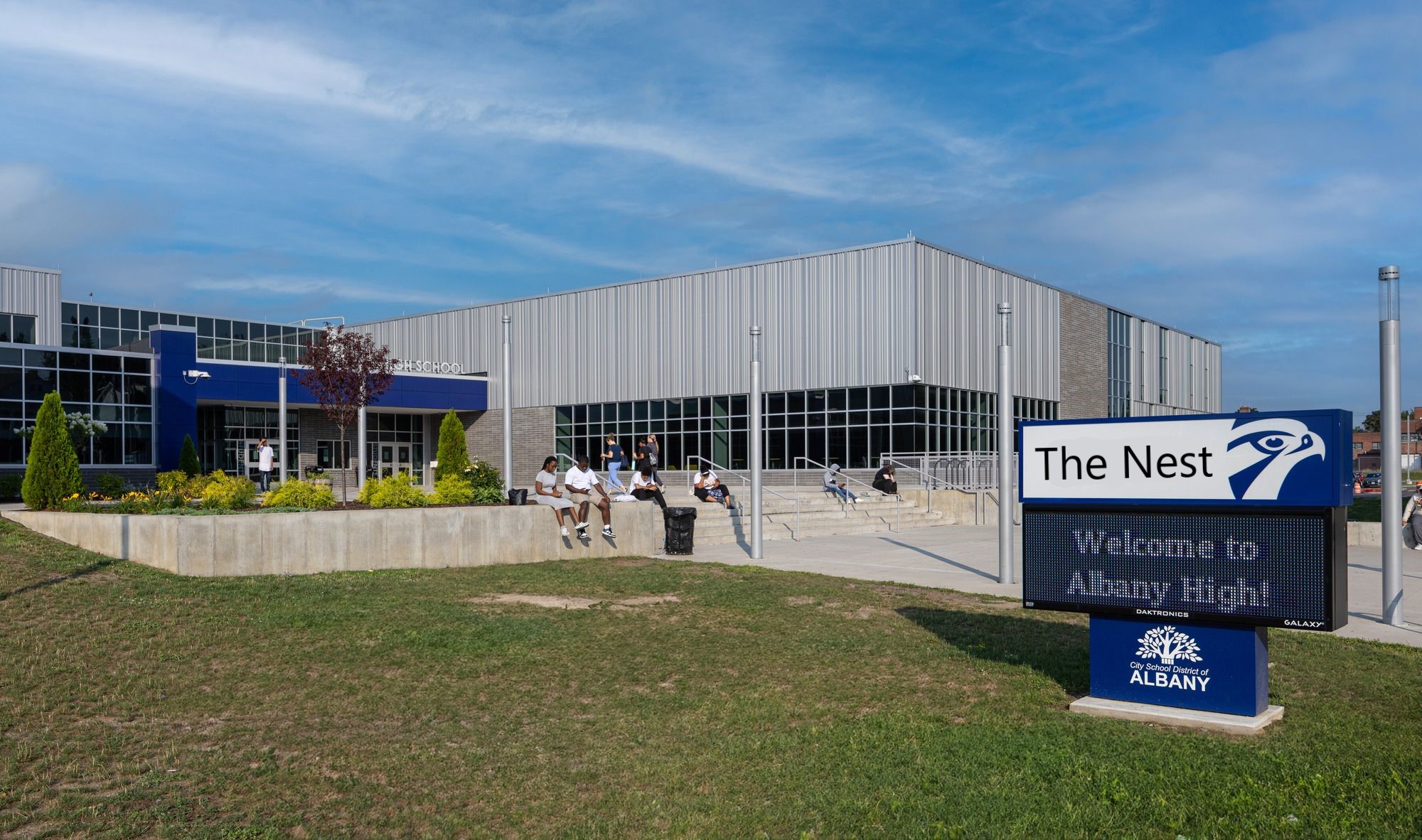


To investigate the prevalence of AI at Albany High, the Nest Newspaper created an anonymous survey for both students and teachers. In turn, we received a wide swath of responses demonstrating the multifaceted nature of the issue.
The responses from students paint a striking issue when asked about the likelihood of utilizing AI for assignments if it were no longer to be punished under the code of conduct. Only 20% of students said that they would uphold academic integrity and wholly abstain from AI usage. Additionally, multiple students professed their usage of AI to cheat on a test or quiz. Students largely reported an uptick in the last three school years of not just their own dependence on AI to complete assignments, but also the growth of teachers encouraging its usage to streamline some processes. From a senior, “AI has made it difficult to put effort into classes and assignments, as many of my classmates simply generate their work in a fraction of the time and get the same grade.” This very interesting duality is even more clearly laid out by a different senior, “There are students in my classes who gladly admit to using AI when teachers aren’t around. I dislike when people gloat about using it for their assignments while I put in work to get them done. Honestly, I feel bad for people that feel like they need to use AI to respond to something; it’s erasing our critical thinking skills in the classroom.” It’s clear to see that some will brazenly utilize generative AI with reckless abandon, leaving their peers feeling that they need to turn to these tools, lest their grades begin to suffer.
The experiences reported by teachers make the situation seem that much more bleak, with one English teacher stating that they encounter AI usage on “Every writing assignment that is not done in class on paper.” Teachers are clearly up against a well-oiled machine; however, they are just as quick to use it themselves. When asked if they themselves had used AI to create classroom materials, one English teacher stated, “Yes, I’ve used it to generate basic ideas, definitions, questions, etc. I always proofread it and often find mistakes, but I don’t have to start from scratch. It’s easier and less time consuming to revise something already made than to start anew.” Additionally, multiple other teachers disclosed how they utilize it to translate materials for students who don’t speak English, which almost certainly places these students at a disadvantage, as there is no way to proofread this translation. Overall, teachers are of two minds when it comes to the role of AI in the classroom and if it even has the possibility to be appropriate, with two other English teachers stating, “… as long as students don’t use it to replace their own thinking. At this point, I am not sure how this would work. The learned helplessness is a major problem amongst students and they are so quick to just look up the answer rather than use any critical thinking or strategies taught.” and “… I love using AI to support learning, like character chat bots or virtual study bots. AI, like any tech tool, has a time and place, and when used reasonably, can be a magical resource for learning!” This creates quite a dilemma; teachers are allowed to use AI, but students are not. Of course, this is because the latter is tantamount to plagiarism, but students are unlikely to see it as such.
The education system is not equipped to handle this kind of technology, and there will be lasting consequences of AI chatbots for generations to come. AI has dramatically shifted the way students understand classwork and has opened up a multitude of possibilities for teachers. One thing is for sure is AI is here to stay, and it’s up to us to decide how much of our lives it infects.